Blogsite Information

Showing posts with label Tours. Show all posts

Monday, November 10, 2008

Travel in Tokyo, the best opportunity for fans of manga and videgames - Viaggio organizzato a Tokyo fra manga e videogames

ASG PRESENTS

TRAVEL AROUND THE JAPAN OF COMICS...

1 week in Tokyo between manga and videogames. The best travel's proposal for fans of Japan, managed by Japan Travel Net & Asian Studies Group 

Program

Day 1 : Departure 

Day 2 : arrival and accommodation 

Day 3: Breathe the air of Tokyo visiting in the district of 
Shibuya shopping and trends. It continues through the music  of Yoyogi park, after that it'll get to Harajuku, 
"Kingdom" of cosplay,  and real atmosphere of manga characters. 

Day 4:  Visiting Mitaka (Tokyo west) and the famous Ghibli Museum. At the end of the visit, moving in Nakanoand nearby to Mandarake, the largest well stocked store of manga and anime. 

Day 5:  Visiting the city of Tokyo, between past and present. Asakusa, Ueno and Akihabara (district of technology)

Day 6:  Going to the  Bandai Museum and free time for shopping 

Day 7:  Excursion to the Suginami Animation Museum, Museum of animation  which offers the opportunity to plunge into the world of anime 

Day 8: Before departure we can not miss a walk in 
to the Tokyo Tower, the lively district of Roppongi where 
can enjoy the view across the city and spend an evening of fun.

Day IX: return to Italy 


Possibility of making trips around Tokyo for satisfy every needs and curiosity: 

Trip to Yokohama 

Visit the monumental city of Kamakura 

Relax at the spa resort of Hakone with a exceptional background: Mount Fuji 

Full day at Nikko 

* The price includes flight with Jal, insurance, accommodation and local guide speaking Italian.


For any further information please feel free to contact us


ASIAN STUDIES GROUP

presente l'itinerario turistico


“Nel Giappone dei fumetti”


I° giorno: partenza


II° giorno: arrivo e sistemazione


III° giorno: per respirare l’atmosfera di Tokyo visita nel quartiere di Shibuya tra shopping e tendenze giovanili.

Si prosegue verso il parco della musica Yoyogi per arrivare ad Harajuku, “regno” dei cosplay, per respirare tutta l’aria di personaggi manga.


IV° giorno: escursione e visita a Mitaka (Tokyo ovest), al famoso ed imperdibile Museo Ghibli. Al termine della visita, spostamento nella vicina Nakano sede di un fornitissimo negozio Mandarake, il più grande di manga e anime.


V° giorno: visita della città di Tokyo, tra passato e presente. Asakusa, Ueno e Akihabara (quartiere tecnologico e ricco di negozi Mandarake per gli appassionati)


VI°giorno: visita al Bandai Museum e tempo libero per lo shopping


VII°giorno: escursione al Suginami Animation Museum, museo d’animazione che offre l’opportunità di buttarsi nel mondo degli anime


VIII° giorno: per salutare Tokyo non può mancare una passeggiata nei pressi della Tokyo Tower, il vivace quartiere di Roppongi dove è possibile godere della vista di tutta la città dall’alto e trascorrere una serata all’insegna del divertimento nei numerosi locali.


IX° giorno: rientro in Italia


Possibilità di effettuare escursioni nei dintorni di Tokyo per soddisfare ogni gusto e curiosità:

Gita a Yokohama


Visita della monumentale città di Kamakura


Un po’ di benessere e relax nella località termale di Hakone con uno sfondo d’eccezione: il Monte Fuji


Intera giornata a Nikko


*La quota comprende volo a/r Jal, assicurazione, alloggio e guida locale parlante italiano.


A seguire qualche immagine da un video amatoriale che ritrae l'interno del Mandarake di Nakano


Ed ecco a seguire un video promozionale in giapponese del famosissimo Museo Ghibli, tappa d'eccezione del nostro tour per appassionati.


Per maggiori informazioni sul tour, prenotazioni o varianti nei programmi di viaggio per i nostri associati, non esitate dal contattarci!


Saturday, August 9, 2008

To make the best choice for your travels in Japan


 As part of a specialist network focused on Japan and Eastern Asia we work to arrange the best solutions for you stay in Tokyo or everywhere in Japan.


Japan Travel Net to get best travel's rates for our members operates for flight reservations and insurance documentations with high level tour operators but arranges directly with japanese partners your  reservations for everykind of accomodation and transportation.

Our main office is seattled in Milan and we've also branch centres in Bologna and Rome in Italy - The japanese Support Staff operates in Tokyo and offers direct help about your travel or business trip schedule in Japan.


Japan Travel Net 's Features

  • Continous consultations managed with personal procedure focused on our members needs
  • Specific knownledges on Japan, in particular our staff is skilled in japanese language, culture, society, market and way of doing business in Japan. 
  • We can co-operate directly with Asian Studies Group, Multidisciplinary Association focused on Eastern Asia, and offering in this way "all inclusive services" to our members.
  • Free consultations focused to improve our network of specialistic figures working on different fields in Japan 
  • Passionate support for japanese society and culture lovers
  • Dynamic and resourceful international staff (we can arrange communication directly in english, italian, spanish, french, deutsch, japanese and chinese languages)
For more specific information about our categories of services, please visit the following link


__________________________________________

Italian Version

Parte di un'associazione multidisciplinare specializzata sull'Asia Orientale, Japan Travel Net opera per offrirvi la miglior soluzione per il vostro soggiorno a Tokyo o in qualsiasi luogo del Giappone.


Per offrire l'accesso alle migliori condizioni di viaggio in tutta sicurezza e competenza operiamo con alcuni dei più grandi tour operators ma gestiamo direttamente la comunicazione con il Giappone per l'accesso agli alloggi e alle prenotazioni di mezzi di trasporto, permettendo un accesso ai servizi ad un costo assolutamente contenuto.

Il nostro ufficio principale è situato in Milano mentre due filiali sono operative su Bologna e Roma. In Tokyo è presente uno staff giapponese bilingue di supporto diretto per i vostri viaggi di piacere, trasferte d'affari o viaggi studio.

Le peculiarità di Japan Travel Net

  • Consulenze continuative amministrate con attenzione sempre personale alle esigenze dei nostri soci
  • Competenze specifiche sul Giappone. In particolar modo, il nostro staff è specializzato in lingua giapponese, in cultura, società, mercato e tecniche sulla conduzione del business in Giappone.
  • Co-operazione diretta con Asian Studies Group, associazione multidisciplinare specializzata in consulenza, formazione e mediazione con il panorama dell'Asia orientale, offrendo così ai nostri soci un servizio "tutto incluso" ad alto livello professionale e a costo contenuto.
  • Le consulenze sono fornite gratuitamente con la finalità di consolidare e accrescere il network di professionisti operanti sinergicamente ance da settori differenti sui mercati asiatici
  • Supporto concreto e gratuito per tutti gli appasionati di cultura e società giapponese.
  • Staff dinamico e dal respiro internazionale (siamo in grado di comunicare direttamente in inglese, italiano, tedesco, spagnolo, francese, giapponese e cinese)
Per maggiori informazioni circa le nostre categorie di consulenza e di programmazione di viaggio consultate il link seguente

Friday, July 25, 2008

Visiting Kyoto, introduction to the ancient and traditional capital of Japan


Natural scenery, temples, shrines, towns and homes intermingle with a poignant historical beauty. Whether it is the Gion Festival, the Tea Ceremony or Japanese flower arrangement or Nishijin-brocade, so many aspects of characteristic Japanese culture continue to thrive in Kyoto. Over a period of 1200 years, dating from the decision to move the capital to Kyoto in 794, it nurtured a splendid, delicate and unique kind of culture, and over the course of history came to be considered the mother of culture within Japan. 
For this reason, Kyoto is often called "Japan's heartland", and it is said that it is impossible to know the real Japan without knowing Kyoto.

At the same time as being an ancient city with a rich cultural heritage, Kyoto is also a vibrant and modern city. While city development continues with the construction of subways and highways, and a focus on the station surrounds and the southern areas, Kyoto also works at preserving its old-style streets and housing. In Kyoto, the old and the new co-exist in perfect harmony.


Nijo Jinya Nakagy-ku 137 Sanboomiya-cho Northwest Kyoto

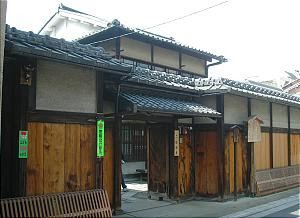
Nijo Jinya is an interesting attraction, although it's not really geared to foreign visitors. This former merchant's home was built in the mid-1600s and served as an inn for provincial feudal lords visiting the capital. What appears to be an average Edo-period mansion, however, is no ordinary dwelling.

The house contains fire-resistant earthen walls and a warren of 24 rooms, and was ingeniously designed to protect the daimyo against possible surprise attacks.

Kyoto Imperial Palace Park 3 Kyoto-Gyoen Kamigy-ku Central Kyoto btwn Teramachi-dri and Karasuma-dri (to east & west) and Imadegawa-dri and Marutamachi-dri (to north & south)


 The Imperial Palace is surrounded by a spacious park with a welcome landscape of trees and open lawn - it's Kyoto's very own Central Park. It's perfect for picnics, strolls and just about any sport that doesn't require retrieving balls over walls. Best of all, it's free. Take some time to visit the pond at the park's southern end, with its gaping carp. The park is most beautiful in the plum- and cherry-blossom seasons (early March and early April, respectively).


Nanzen-ji Temple
Higashiyama-ku Nanzen-ji Fukuchi-ch From the Tozai line subway stop Keage, walk 5mins downhill.

The Nanzen-ji Temple is one of Kyoto's most pleasant temples, with expansive grounds and numerous sub-temples. It began as a retirement villa for Emperor Kameyama but was dedicated as a Zen temple on his death in 1291. Civil war in the 15th century destroyed most of it; the present buildings date from the 17th century.

Kinkaku-ji

For a retirement home, the 

gold-sheathed Kinkaku-ji is pretty magnificent. Shogun Yoshimitsu Ashikaga (1358-1409) had it constructed in 1393 for the time when he would quit politics -- the following year, in fact -- to manage the affairs of state through the new shogun, his 10-year-old son. On Yoshimitsu's death, his son followed his father's wishes and converted the villa into a temple named Rokuon-ji. The structure sits, following the Shinden style of the Heian period, at the edge of the lake. Pillars support the three-story pavilion, which extends over the pond and is reflected in the calm waters. To underscore this statement of his prestige and power, the shogun had the ceiling of the third floor of the pavilion covered in gold leaf.

In 1950 a student monk with metaphysical aspirations torched Kinkaku-ji, burning it to the ground. (Yukio Mishima's book Temple of the Golden Pavilion is a fictional exploration of the mind of the student.) Kinkaku-ji was rebuilt in 1955 based on the original design, except that all three stories were covered with gold leaf, in accordance with the shogun's original intention, instead of only the third-floor ceiling.

Kiyomizu -dera

Kiyomizu 1-chome, Higashiyama-ku, Kyoto


For centuries visitors and pilgrims have climbed the cobbled streets to Kiyomizu-dera, which stands prominently on a steep hillside with fine views of the city. Supported in part by 139 pillars, the temple juts out over the valley. Finding the courage to set out on a daring, new adventure is likened to "taking a leap from the veranda of Kiyomizu." The cypress-shingle roof harmonizes with the cryptomeria-covered hills, and below is the slender Sound of Feathers waterfall, believed to be the original source of kiyomizu,or pure water, which is drunk to prevent illness, using long-handled cups. The valley stroll garden is meant to suggest the southern paradise of the bodhisattva Kannon, the 11-faced goddess of mercy.

Built in 788, the original temple, which today belongs to the Hosso sect, predates Kyoto by six years. Although Kiyomizu-dera honors the popular Kannon, to whom women pray for an easy childbirth, it has become over time a sort of everyman's temple. You'll see evidence of this throughout the grounds, from the stacked rows of little Jizo Bosatsu statues (representing the god of travel and children) to the many koma-inu(mythical guard dogs), donated by grateful patrons, marking the pathways.

Ryoan-ji

13 Goryoshita-machi, Ryoan-ji, Ukyo-ku, Kyoto

The garden at Ryoan-ji, rather than the temple, attracts people from all over the world. Knowing that the temple belongs to the Rinzai sect of Zen Buddhism may help you appreciate the austere aesthetics of the garden. It's a karesansui, a dry garden: just 15 rocks arranged in three groupings of seven, five, and three in gravel. From the temple's veranda, the proper viewing place, only 14 rocks can be seen at one time. Move slightly and another rock appears and one of the original 14 disappears. In the Buddhist world the number 15 denotes completeness. You must have a total view of the garden to make it a meaningful experience -- and yet, in the conditions of this world, that's not possible.

Gion

 This is the legendary haunt of geisha, or geiko, as they are called in the ancient capital. In the early evening, in the glow of teahouse lanterns, you can see them scurrying along the cobbled backstreets on their high geta, white-faced, on the way to their appointments. In their wake their maikofollow -- the young apprentice geisha identified by the longer sleeves of their kimonos.

The culture of the geisha and ochaya (teahouse) developed in the 16th and 17th century, partly due to the banning of women from the Kabuki stage, which remains unchanged. Female performers channeled their artistic talents, including singing, dancing, and playing musical instruments, into entertaining the male patrons of teahouses. The heart of the district is on Hanami-koji-dori. Heading north, the street intersects with Shinmonzen-dori, which is famous for its antiques shops and art galleries. Here you can find collectors' items -- at collectors' prices -- which make for interesting browsing, if not buying.


Here you can see Geisha's dance in Gion


Japan Travel Net manages for free as part of social promotion association called Asian Studies Group, several routes for your journey in Japan - 

OUR SUGGESTION: Make a prenotation for "10 beautiful Days in Tokyo" and consider to add 1 week in Kansai with accomodation in Kyoto. We'lle be able to help you to arrange daily trips in Himeji, Nara, Osaka and Kobe during your stay in Kyoto.

We'd also want to promote the wellness weekend in Hakone and allow you to enjoy japanese natural spa closer to Ashinoko lake and Fuji Mt. For further information please read our introduction to Hakone wellness tripe schedule

For other questions please feel free to contact us

Italian Version

Japan Travel Net offre a tutti gli appassionati di viaggio e di Giappone consulenze gratuite per la valorizzazione del vostro itinerario personalizzato. Lavoriamo come staff parte di un'associazione di promozione sociale denominata Asian Studies Group e specializzata nella formazione linguistica e culturale sull'Asia Orientale.


I nostri consigli: Dopo aver prenotato l'itinerario "10 giorni meravigliosi a Tokyo" aggiungete 1 settimane di permanenza nel Kansai, con soggiorno a Kyoto. Vi aiuteremo a programmare il vostro itinerario includendo anche Osaka, Kobe, Nara e Himeji.

Vogliamo inoltre promuovere la soluzione benessere ad Hakone per chi volesse passare dei momenti all'insegna del relax e della tradizione nelle vicinanze di Tokyo, ai piedi del Monte Fuji e sul Lago Ashinoko, godendosi l'atmosfera di un albergo tipico e le terme naturali a cielo aperto del luogo. Per ulteriori informazioni, leggete l'introduzione al nostro itinerario di un week end su Hakone

Per ulteriori dettagli o informazioni gratuite non esitate a contattarci

Se siete inoltre interessati a programmi di formazione linguistica e culturale sul Giappone, visitate il link di Asian Studies Group, associazione operativa su Milano, Bologna e Roma


Saturday, July 19, 2008

Hakone, wellness paradise: relax trip and japanese spa

Hakone is one of the most popular area famous for its nice hot springs, located in the center of the Fuji-Hakone-Izu National Park and against the backdrop of Mt.Fuji. Approx. 160mins. from Narita Int'l Airport by train.


Hakone hosts substantial tourist activity, and many, both Japanese and international visitors come to Hakone to relax, for treatment at the health resorts, or to visit the parks and mountains.


    A view of Mt. Fuji is not the only view that you can enjoy in Hakone. There are a number of spots to visit, including O-waku-dani (where volcanic fumes still bear a trace of the Hakone Volcano), Lake Ashi-no-ko (created in the crater of the Hakone Volcano), Susuki-sogen (silver grass field) of Sengokuhara, a stone Buddha and stone towers situated in Moto-Hakone, and cedar trees along Kyu-Kaido Street. Various methods of transportation, such as mountain railway, cable car, ropeway, and cruising boat, are available to bring you to these spots. 

In addition, Hakone is also home to various museums. The Hakone Open Air Museum, the Narukawa Art Museum for modern Japanese paintings, the Pola Museum of Art featuring Western paintings, and the Venetian Glass Museum are only a few to mention among many that attract a number of visitors.


Japan Travel Net, in cooperation with Asian Studies Group Association and several official and professional agencies offers interesting accomodation's solutions in Hakone and arranges prenotations, access to cultural events, facilities and transports. Our travel consultation and organization is totally free as part of social promotion association's activity.

Our Suggestions:


Yuugiroso Inn, located close to Lake ASHINOKO. Enjoy Japanese dishes and out-door hot spring


Prices: Week end in Hakone, 2 nights in full furnished japanese style Hotel, closer to lake Ashinoko, with free access to hot springs (SPA), transportations, and full support consultation from 200 euro for person!!

Tour Package: Tokyo and Hakone - You'll be able to request Hakone Wellness Trip (code WE1) with "10 Days in Tokyo package" (code OOA) with special discount!

For further information (flight, insurance, group's schedule, transportations, other tours) please contact us

Italian Version


Hakone (Hakone machi) è una cittadina giapponese nella zona montuosa omonima, si trova nelle vicinanze di Tokyo ed è una frequentatissima méta turistica, celebre per i panorami del monte Fuji, per gli impianti termali ed il Parco Nazionale Fuji-Izu-Hakone. Altre attrattive sono costituite dai fenomeni vulcanici attivi della "Grande valle ribollente" (Owakudani) e dal tempio che è situato sulle rive del lago Ashi

Japan Travel Net in collaborazione con Asian Studies Group, associazione di promozione sociale specializzata nella formazione linguistica e culturale, attraverso uno staff di agenzie specializzate giapponesi focalizza in termini gratuiti una consulenza di viaggio professionale e un accesso al tour proposto ad un costo assolutamente concorrenziale.

Week end ad Hakone  (2 notti) con accesso alla struttura alberghiera indicata, comprendente terme all'aperto accessibili 24 h su 24, trasporto, consulenza, supporto al viaggio compreso, a partire da 200 euro per persona. Il pacchetto "Benessere ad Hakone" (codice WE1) può essere aggiunto al tour "10 Giorni a Tokyo" (cod. 00A) ad un prezzo assolutamente speciale.

Per maggiori informazioni non esitate a contattarci!